You are still the CTO.
You shouldn't have to be.
I join your leadership team 8–12 hours a week and own what a full-time CTO would: the roadmap, the hires, the architecture, and the HIPAA, FDA and SOC 2 questions that stop a deal or a round. It starts with a two-week readiness audit and a 90-day roadmap.
Formerly Director of Engineering, Verily (Google Life Sciences) · Genalyte · NASA JPL
- A written readiness score across architecture, security, compliance, team and AI
- The three risks most likely to cost you a customer, an audit finding or a funding round
- A 90-day roadmap you can run with or without me
- A one-page board or investor summary
You may not need a full-time CTO yet. You may need a fractional one.
If two or more of these are true, the audit will pay for itself in the first month.
You are the final call on architecture, vendors and security
And you have a company to run. Decisions wait, or get made by whoever is loudest.
Your VP of Engineering left and the roadmap slowed
The team is good. Nobody is setting direction, and a replacement search takes six months.
AI pilots exist, but nobody owns which ones ship
Three demos, no production path, and a board asking what the AI strategy is.
HIPAA, FDA or SOC 2 is about to come up
A customer, auditor or investor will ask, and the answer currently lives in someone's head.
Diligence is coming
A raise, an acquisition conversation or an enterprise contract that will look hard at your stack.
You can't tell if engineering is slow or just busy
You want a number you trust, not a status update.
Technology & AI Readiness Audit
Two weeks, mostly my time, about four hours of yours. No slide theater. You get a scored assessment, the three risks that matter, and a roadmap with owners and dates.
Let's talkArchitecture and delivery
Stack, infrastructure, release process, the velocity number you can defend.
Security and compliance posture
HIPAA, FDA software (62304, Part 11 where it applies), SOC 2. Gaps ranked by the question that will expose them first.
Team and org design
Who you have, who you are missing, what to hire first and what to contract.
AI and data readiness
Which pilots deserve a production path, what data and governance they need, and what to stop.
Build vs. buy and vendor exposure
Where you are paying twice, and where a vendor is a single point of failure.
Start small. Expand only if it earns it.
Intro call
You describe what is slowing you down. I tell you honestly whether the audit is the right next step, or whether you need a VP of Engineering, a vendor or nothing at all.
Readiness audit
Interviews, code and infrastructure review, compliance walk-through. Delivered as a scored report, a 90-day roadmap and a board-ready one-pager.
Advisory seat or fractional CTO
Most clients choose a monthly advisory seat or an 8–12 hour-a-week fractional CTO retainer to run the roadmap. The audit fee is credited. Two retainer clients at a time, never more.
A good fit
- Founder-led, 50–500 people, health-tech, diagnostics or life sciences
- Software is central to the product or the operation
- You want a decision-maker, not another report
Not a fit
- Pre-product with no engineers yet
- Looking for outsourced development or IT support
- Need a full-time executive in the seat this quarter
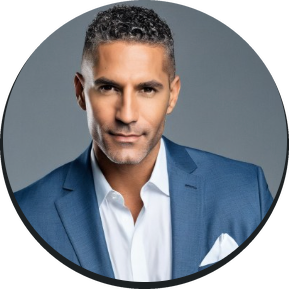
John Negron
Most recently Director of Engineering at Verily, Google's life-sciences company under Alphabet, where I led a 30+ person organization across four product lines. I built the AI agent prototype that broke a six-month product stalemate and became the foundation of a company-wide AI program, raised engineering velocity 44.7% in one half, and delivered 100% of commitments on time through a reduction in force.
Before that I led engineering at Genalyte, building FDA-regulated diagnostic lab systems where software, hardware and compliance had to ship together. I started my career at NASA's Jet Propulsion Laboratory. I hold a patent (US 2014/0074744), co-authored two NASA JPL papers on the Terrestrial Planet Finder mission, Progress in Broadband Infrared Nulling Technology for TPF and Mid-IR Interferometric Nulling for TPF, and hold degrees in Computer Science.
Based in Orange County, California. Remote or on site in Southern California.
“John built the AI agent prototype that broke a six-month stalemate and seeded our company AI program, lifted velocity nearly 45% in one half, and delivered commitments on time through a reduction in force. He translates technology into risk and revenue clearly. He would be a highly capable, energetic and visionary CTO for any founder-led health company.”
Tell me what's slowing you down.
Takes a minute. I read every one myself and reply within one business day with either a 20-minute slot or an honest "this isn't the right fit."
- No sales sequence. One reply, from me.
- Please don't include patient information.
Questions founders ask first
What does the audit cost?
A fixed fee, stated on the intro call before you commit, and credited against the first month if we continue. [PRICE if you choose to publish it.]
How much of my team's time does it take?
About four hours of yours and six to eight across engineering, spread over two weeks.
Will you sign a BAA or NDA?
Yes to an NDA before we start. A BAA if the audit touches systems holding PHI; usually it doesn't need to.
Can you become our full-time CTO later?
Sometimes that's the right answer and I'll say so. More often the roadmap tells you exactly who to hire, and I help you hire them.